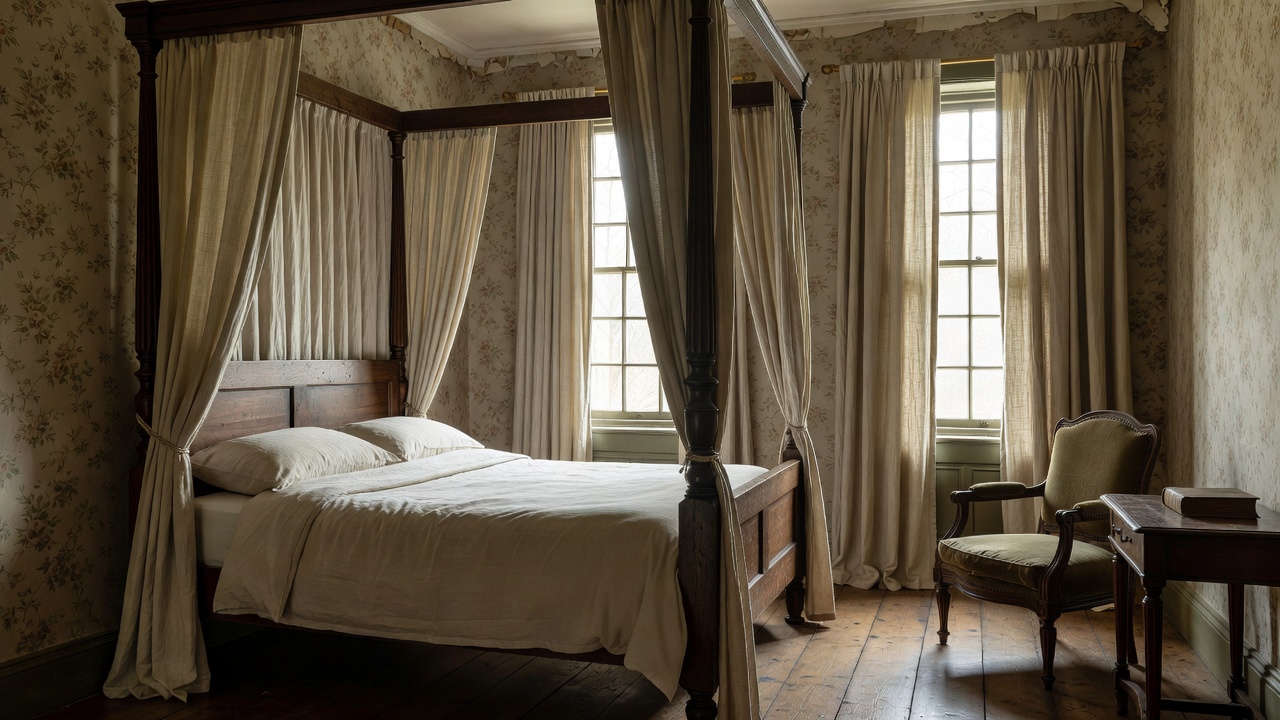
Start with the exact room
Room categories in old houses often contain more variation than their names suggest. Two bedrooms described as superior may occupy different wings, have different window sizes and require different routes from reception. Ask whether photographs show the room being offered or a representative example. If a particular feature matters, have it recorded as a confirmed arrangement rather than a preference wherever the operator can do so.
Floor area alone is a poor guide to usability. A large attic room can have restricted headroom, while a smaller room may offer a straightforward bathroom route and better bedside lighting. Establish bed dimensions, seating, luggage space and the position of power sockets. These questions are especially useful for a longer stay, when attractive but awkward furniture becomes part of a daily routine.
Sleep is more than a mattress
Consider the room’s relationship to the working house. Kitchens, service stairs, event terraces and delivery areas create different patterns of sound. Thick masonry does not necessarily stop noise through a connecting door or timber floor. Ask whether events are planned and whether your bedroom is above or beside a shared room. A rural location can be quiet overall while a particular corner remains busy.
Light matters too. Decorative shutters may not close, and beautiful curtains may not darken the room fully. If you are sensitive to early daylight, ask specifically about blackout provision. Explain practical needs without expecting the operator to diagnose your sleep. A useful answer describes the room’s features and limitations rather than guaranteeing silence that no occupied building can reliably promise.
What restoration can and cannot tell you
Repairing an old building involves choices about fabric, moisture, services and significance. The Society for the Protection of Ancient Buildings publishes guidance on caring for older buildings, while Historic England offers technical and conservation advice. These sources help explain why a historic window or wall may be retained. They do not establish whether a guest room has effective cooling.
Likewise, a protected building is not automatically exempt from every adaptation, nor does a heritage label explain a particular operational decision. Ask the property what has actually been installed. Secondary glazing, draught reduction and heating controls can change comfort substantially. “Recently restored” is a starting point for questions, not a technical specification or an assurance that every room performs identically.
Read the bathroom and climate carefully
A freestanding bath photographs well but may not suit someone who needs a level shower. Confirm thresholds, grab-rail positions, shower controls and whether assistance equipment can be accommodated. Ask for measurements where necessary. An en-suite bathroom can still involve an internal step, a narrow door or a route around furniture. Descriptive terms such as spacious and accessible are not substitutes for details.
For temperature, separate heating, ventilation and cooling. Can guests open the windows safely? Is there mechanical air conditioning, a portable unit or only a fan? Can the room temperature be adjusted independently? Heavy walls can moderate some conditions without making every summer night comfortable. If temperature is essential to your health or rest, discuss it before paying a non-refundable rate.
Access is a continuous journey
The AccessAble approach to detailed access information demonstrates why measurements and routes matter. A step-free bedroom is not enough if breakfast requires stairs. Trace the journey from parking through the entrance, lift, corridors, bedroom, bathroom and dining spaces. Ask about door operation, resting places and evacuation arrangements suited to your needs. Do not infer assistance from the presence of a lift.
Personal access requirements also differ between guests. A person using a wheelchair, someone with limited stamina and a visitor with sensory needs may need very different information. Euan’s Guide offers an additional perspective through disabled access reviews; individual accounts are useful context but should be checked against the property’s current arrangements. A previous guest’s successful visit is not a guarantee of your own route.
Three questions, before the reservation
“What activity takes place directly beside or below this room during our dates?”
“Can you describe every step and threshold from parking to the shower and dining room?”
“Which heating, cooling, lighting and window controls can we operate ourselves?”
Compare answers with your priorities rather than an abstract ideal of luxury. A modest room that works can be a better choice than a showpiece suite that repeatedly asks you to compromise.
Continue to the house at table