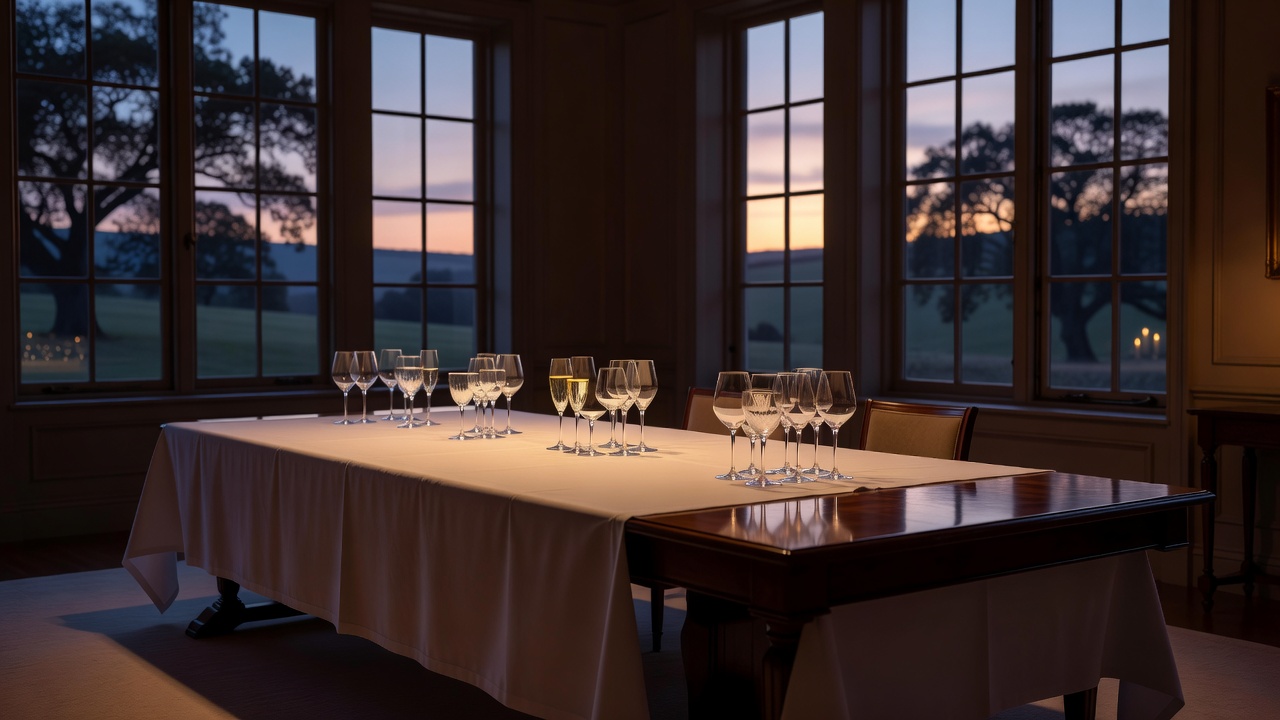
The dining reservation is a separate decision
A bedroom booking does not necessarily secure a table. An estate restaurant may welcome local diners, host private events or operate only on selected evenings. Confirm availability before committing to accommodation if dinner in the house is central to your plans. Ask whether a room package includes a full menu, an allowance towards food or a fixed dinner with supplements.
Also ask what happens on the evening you do not want a formal meal. A lounge menu, room service and a late snack are different services with different hours. Rural surroundings can make an alternative restaurant a substantial journey rather than a short walk. Establish transport options before enjoying wine, and do not assume that a nearby pub serves food every night.
Understand the pace before choosing the menu
A tasting menu can be a rewarding way to spend an evening, but it asks for time and attention. Find out the likely duration, the latest seating and whether shorter alternatives exist. If you need an early night or are travelling with children, say so before booking. An excellent kitchen cannot always compress a carefully sequenced menu without changing the experience.
Dress guidance should be equally explicit. Country-house formality varies widely, and a historic room does not establish a dress code by itself. Read the current restaurant information rather than relying on photographs of other guests. Good service makes expectations intelligible without making you feel tested. If a requirement affects what you pack, request a clear answer in advance.
Communicate dietary needs with precision
Tell the restaurant about allergies, intolerances and other dietary requirements as early as possible, using clear language. Ask what can be accommodated and what limitations apply, including shared preparation areas. Reconfirm the information with staff when you arrive and before the meal. A note attached to a bedroom reservation may not have reached the team taking your order.
The Food Standards Agency’s allergy and intolerance guidance is a useful starting point for understanding food-safety communication. Food Standards Scotland provides the relevant national context in Scotland. Neither a luxury description nor an award guarantees that a particular kitchen can meet your needs. If the answer is uncertain, seek clarification directly rather than treating a general reassurance as a safety assessment.
Read provenance as a claim that needs detail
Estate-grown vegetables, kitchen gardens and local suppliers can enrich a meal’s relationship with its setting. They do not mean that every ingredient comes from within the boundary. Ask what is grown on site, how seasonality changes the menu and which products come from elsewhere. Specific answers are more informative than a broad statement that the kitchen is sustainable or entirely local.
Le Manoir aux Quat’Saisons offers an official reference point for the relationship between gardens and dining, while Gravetye Manor provides another setting in which garden and house can be read together. These examples illustrate questions worth exploring, not a claim that their methods, menus or availability are interchangeable. Consult each property’s current information for the experience actually offered.
Breakfast is part of the hospitality audit
Breakfast often reveals how a house handles ordinary needs after the theatre of dinner. Confirm the service window, whether cooked dishes are included and whether an early departure can be supported. A generous breakfast room is of limited use if it opens after your booked train requires you to leave. Ask about takeaway arrangements beforehand rather than assuming they will be possible.
Look for a calm handover between staff, legible choices and drinks arriving while they are still wanted. Self-service is not inherently less premium than table service; confusion and unattended shortages are the more meaningful weaknesses. If you have access needs, ask how the buffet or ordering system works. The practical route to breakfast deserves as much attention as the room’s decorative setting.
Interpret awards without outsourcing your judgment
The MICHELIN Guide and AA Rosettes offer different forms of restaurant assessment. They can help identify a particular style of dining, but neither tells you whether that style suits your visit. Check current listings at the source and keep dining recognition separate from bedroom comfort, access and overnight service.
The useful final question is simple: will this dining arrangement make your stay easier and more enjoyable? Confirm charges, discretionary service arrangements and drinks separately. Then choose with confidence, whether that means a long dinner, an early supper or a night exploring beyond the estate.
Continue out into the estate